Jewellers
Oct 29, 2026
What Documents Do You Need When Selling Diamond Jewellery?
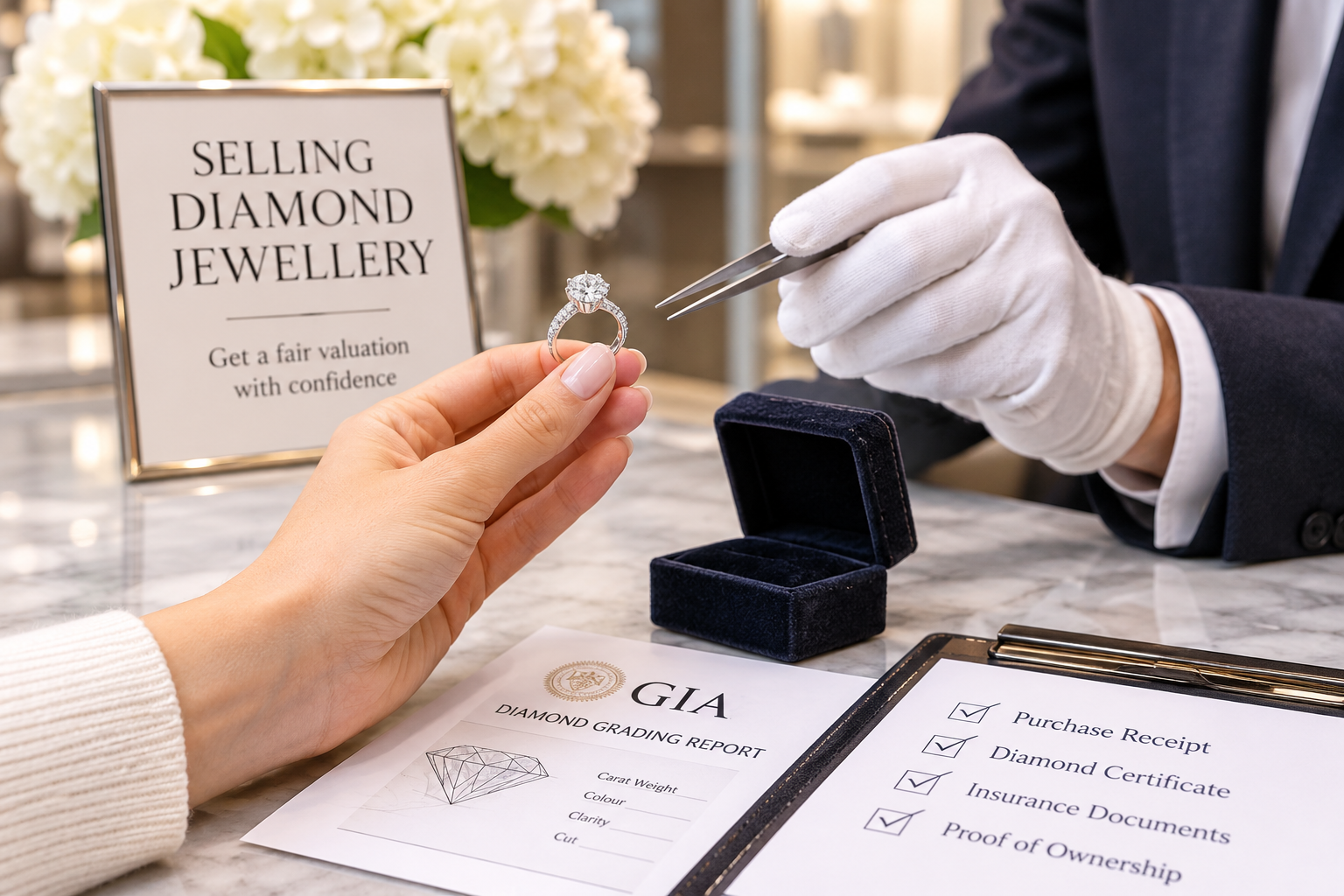
Selling your diamond jewellery is a great way to access the value of items you no longer use. There are many types of diamond jewellery that you can sell. These include an old engagement ring, a diamond necklace, a family heirloom, or a custom-made piece. If you have the correct documentation for these items, it will make the selling process simpler, safer, and much more transparent.
When selling diamond jewellery in London, it's essential to know what types of documentation potential purchasers might ask for when assessing the value of your items. It's also helpful to understand how these documents assist in determining the worth of your diamond jewellery and how to proceed if you've misplaced or discarded the original paperwork.
Your guide on selling valuable items, like a diamond grading certificate or proof of ownership.
The grading report for a diamond is an essential document that should be provided by you as the seller of your diamond jewellery. This report will provide the buyer with unbiased, objective information regarding the quality of the diamond along with its specific characteristics.
The certification of diamonds by recognised gemological laboratories, like the Gemological Institute of America (GIA), states information regarding the diamond's:
The four "C's" are used by consumers to evaluate both the quality of a diamond and what it may cost.
If you purchased a diamond engagement ring in London, see if you got a grading report with it. Keep that paper safe so it will be easier to sell or value your ring.
Don't worry; a professional jeweller or diamond expert will evaluate your jewellery and determine what it is made of. Furthermore, depending upon the type of diamond, you may be able to get an updated independent grading report.
Original Purchase Receipt or Invoice
When you sell your diamond jewellery, the original receipt may be important evidence.
It will show you who sold the jewellery to you and when it was bought, along with details of what the original piece was.
Ideally, your invoice should include:
A store receipt can show your jewellery's age, but the purchase price is usually much higher than what you could get if you sold it.
The price of diamonds may vary based on market demand, the quality of the diamond, the condition of the diamond, and other factors.
If you are selling a piece of expensive diamond jewellery, it is possible that a buyer will want to see proof that you have legal ownership of the item.
This helps protect both the seller and the buyer during the transaction.
Acceptable supporting documents may include:
For jewellery that is part of an inheritance, it may be possible to provide additional proof of ownership through documents related to the deceased person's estate (such as probate) or through other estate-related documents.
It's a beneficial idea to check if there are ownership papers for your inherited diamond ring or family heirloom prior to meeting with potential buyers.
Jewellery Valuation Certificate
A certificate for a jewellery appraisal will provide you with an estimate of how much your diamond jewellery is worth.
However, it is necessary to realise that different types of valuations exist.
For example:
Insurance appraisal: Determines what it will cost to replace the jewellery if it is lost, stolen, or damaged.
The resale value of your jewellery will give you a rough estimate of how much money you could make if you sold it on the second-hand market.
Estate valuation: Helps establish a value for inheritance or probate purposes.
An insurance valuation is different from a resale valuation. Oftentimes, the value of an insurance valuation will exceed what a prospective buyer would be willing to pay for your property.
A valuation of your jewellery that has occurred recently should be taken along with you when you sell your jewellery. While the valuation will provide a helpful basis for understanding, the buyer may still choose to conduct an independent evaluation of the jewellery.
The original packaging is not required by law, but it will help you sell your diamond jewellery.
Please bring with you the original brand-name packaging, display case, authentication documentation, or diamond paperwork (if available).
Original packaging may provide evidence of where the jewellery originated, especially when it was produced by a well-known high-end jewellery manufacturer.
The original drawings, sketches, and receipts for custom-made items from a custom jeweller will further demonstrate the craftsmanship and uniqueness of each piece.
However, remember that packaging alone does not guarantee a higher resale price.
Identification Documents
When you sell expensive jewellery in the United Kingdom, your buyer might ask for some form of ID to complete their customer verification and anti-money laundering requirements.
You may be asked to provide:
Keep your insurance, service, and repair records for your diamond jewellery together. These types of documents may contain relevant data regarding the jewellery's past and current condition.
For example, the repair history will show if the ring was resized, its setting was strengthened, or a diamond was replaced.
This information will be especially useful if you are selling old or customised jewellery in London, as the design of each item can vary greatly.
Be truthful regarding past repair work or damages. A professional appraisal will take into account how well-maintained the item of jewellery is at present to determine its value.
When you sell your jewellery, whether it is an inherited piece or a gift from long ago, some people do not keep up with their receipts and other documentation.
The wonderful thing about having missing documents is that they will not stop you from selling diamond jewellery.
A professional diamond specialist can assess your piece by examining:
If you need additional confirmation, they can suggest independent testing and grading of your diamonds.
Don't assume a part of an item is worthless just because you can't find the original documentation or receipt.
Before going to see a jeweller to sell your items, prepare your paperwork and set up your items for sale.
Here are some practical tips:
Final Thoughts
Buying and selling diamonds should not be difficult. It will be easier if you have all of the proper documentation, which can verify that your diamond is real and make the buyer feel confident that they are purchasing an authentic item.
Certificates, receipts, ownership records and appraisals can be very beneficial when selling your old engagement ring, inherited diamonds or custom-made jewellery.
The use of professional evaluation may be used to identify the features and possible monetary worth of your jewellery when you have incomplete documentation.
When it comes to purchasing a diamond engagement ring in London, ordering custom-made jewellery from a reputable jeweller in London, or selling a pre-owned item, the best starting point is to choose a skilled, professional jeweller with a good reputation.
Frequently Asked Questions
Yes, you can usually sell your diamond jewellery if it doesn't have the original grading certificate. A jeweller can assess the diamond's quality and characteristics.
While a certified grading report may assist a potential buyer in verifying the quality of a diamond, it does not necessarily enhance the diamond's overall market value.
Original receipts are not always required; however, they may assist in proving the purchase history and ownership of the item.
The resale value of your diamond depends on its four C's, the amount of precious metal in your ring/jewellery, its condition, how well it was crafted, the brand, and the current demand for that type of diamond.
When selling diamond jewellery in London, it's essential to know what types of documentation potential purchasers might ask for when assessing the value of your items. It's also helpful to understand how these documents assist in determining the worth of your diamond jewellery and how to proceed if you've misplaced or discarded the original paperwork.
Your guide on selling valuable items, like a diamond grading certificate or proof of ownership.
Diamond Grading Certificate
The grading report for a diamond is an essential document that should be provided by you as the seller of your diamond jewellery. This report will provide the buyer with unbiased, objective information regarding the quality of the diamond along with its specific characteristics.
The certification of diamonds by recognised gemological laboratories, like the Gemological Institute of America (GIA), states information regarding the diamond's:
- Cut: How well the diamond has been cut and how it reflects light.
- Colour: The presence or absence of colour in a diamond.
- Clarity: The number and visibility of natural inclusions or blemishes.
- Carat Weight: The weight of the diamond, measured in carats.
The four "C's" are used by consumers to evaluate both the quality of a diamond and what it may cost.
If you purchased a diamond engagement ring in London, see if you got a grading report with it. Keep that paper safe so it will be easier to sell or value your ring.
What if you have lost your certificate?
Don't worry; a professional jeweller or diamond expert will evaluate your jewellery and determine what it is made of. Furthermore, depending upon the type of diamond, you may be able to get an updated independent grading report.
Original Purchase Receipt or Invoice
When you sell your diamond jewellery, the original receipt may be important evidence.
It will show you who sold the jewellery to you and when it was bought, along with details of what the original piece was.
Ideally, your invoice should include:
- Jewellery description and product details.
- Diamond carat weight, where available.
- Metal type, such as platinum or 18-carat gold.
- Purchase date.
- Original purchase price.
- Jeweller or retailer information.
A store receipt can show your jewellery's age, but the purchase price is usually much higher than what you could get if you sold it.
The price of diamonds may vary based on market demand, the quality of the diamond, the condition of the diamond, and other factors.
Proof of Ownership
If you are selling a piece of expensive diamond jewellery, it is possible that a buyer will want to see proof that you have legal ownership of the item.
This helps protect both the seller and the buyer during the transaction.
Acceptable supporting documents may include:
- Original purchase invoice.
- Jewellery valuation certificate.
- Insurance documentation.
- Gift receipts, where available.
- Other relevant ownership records.
For jewellery that is part of an inheritance, it may be possible to provide additional proof of ownership through documents related to the deceased person's estate (such as probate) or through other estate-related documents.
It's a beneficial idea to check if there are ownership papers for your inherited diamond ring or family heirloom prior to meeting with potential buyers.
Jewellery Valuation Certificate
A certificate for a jewellery appraisal will provide you with an estimate of how much your diamond jewellery is worth.
However, it is necessary to realise that different types of valuations exist.
For example:
Insurance appraisal: Determines what it will cost to replace the jewellery if it is lost, stolen, or damaged.
The resale value of your jewellery will give you a rough estimate of how much money you could make if you sold it on the second-hand market.
Estate valuation: Helps establish a value for inheritance or probate purposes.
An insurance valuation is different from a resale valuation. Oftentimes, the value of an insurance valuation will exceed what a prospective buyer would be willing to pay for your property.
A valuation of your jewellery that has occurred recently should be taken along with you when you sell your jewellery. While the valuation will provide a helpful basis for understanding, the buyer may still choose to conduct an independent evaluation of the jewellery.
Original Jewellery Packaging and Box
The original packaging is not required by law, but it will help you sell your diamond jewellery.
Please bring with you the original brand-name packaging, display case, authentication documentation, or diamond paperwork (if available).
Original packaging may provide evidence of where the jewellery originated, especially when it was produced by a well-known high-end jewellery manufacturer.
The original drawings, sketches, and receipts for custom-made items from a custom jeweller will further demonstrate the craftsmanship and uniqueness of each piece.
However, remember that packaging alone does not guarantee a higher resale price.
Identification Documents
When you sell expensive jewellery in the United Kingdom, your buyer might ask for some form of ID to complete their customer verification and anti-money laundering requirements.
You may be asked to provide:
- A valid passport.
- A UK photocard driving licence.
- Another accepted form of photographic identification.
- Proof of address, where required.
- The exact requirements depend on the buyer and the transaction.
- You must provide proper identification to prove who you are and to support an open and honest sales transaction.
- Insurance and Repair Records
Keep your insurance, service, and repair records for your diamond jewellery together. These types of documents may contain relevant data regarding the jewellery's past and current condition.
For example, the repair history will show if the ring was resized, its setting was strengthened, or a diamond was replaced.
This information will be especially useful if you are selling old or customised jewellery in London, as the design of each item can vary greatly.
Be truthful regarding past repair work or damages. A professional appraisal will take into account how well-maintained the item of jewellery is at present to determine its value.
What If You Don't Have Any Documents?
When you sell your jewellery, whether it is an inherited piece or a gift from long ago, some people do not keep up with their receipts and other documentation.
The wonderful thing about having missing documents is that they will not stop you from selling diamond jewellery.
A professional diamond specialist can assess your piece by examining:
- Diamond size, quality and characteristics.
- Precious metal type and weight.
- Overall condition.
- Craftsmanship and setting.
- Current market demand.
If you need additional confirmation, they can suggest independent testing and grading of your diamonds.
Don't assume a part of an item is worthless just because you can't find the original documentation or receipt.
Tips to Prepare Before Selling Diamond Jewellery
Before going to see a jeweller to sell your items, prepare your paperwork and set up your items for sale.
Here are some practical tips:
- Please gather all of your relevant paperwork together, including certificates, receipts, valuations, and insurance documents.
- Inspect the quality of your jewellery: check for loose stones, damaged settings, and signs of use.
- Understand the 4C's of a diamond: Understanding the basics can help you understand what buyers look for when they evaluate your jewellery.
- Seek an independent assessment to find out what it could sell for.
- Before you make your final choice, examine the reputation of each buyer by looking at their experience, honesty/transparency and the way they pay.
- Keep records of your purchase: Request a copy of the receipt for your transaction and payment.
Final Thoughts
Buying and selling diamonds should not be difficult. It will be easier if you have all of the proper documentation, which can verify that your diamond is real and make the buyer feel confident that they are purchasing an authentic item.
Certificates, receipts, ownership records and appraisals can be very beneficial when selling your old engagement ring, inherited diamonds or custom-made jewellery.
The use of professional evaluation may be used to identify the features and possible monetary worth of your jewellery when you have incomplete documentation.
When it comes to purchasing a diamond engagement ring in London, ordering custom-made jewellery from a reputable jeweller in London, or selling a pre-owned item, the best starting point is to choose a skilled, professional jeweller with a good reputation.
Frequently Asked Questions
1. Can I sell diamond jewellery without a certificate?
Yes, you can usually sell your diamond jewellery if it doesn't have the original grading certificate. A jeweller can assess the diamond's quality and characteristics.
2. Does an original diamond certificate increase resale value?
While a certified grading report may assist a potential buyer in verifying the quality of a diamond, it does not necessarily enhance the diamond's overall market value.
3. Do I need an original receipt to sell a diamond ring?
Original receipts are not always required; however, they may assist in proving the purchase history and ownership of the item.
4. How is the resale value of diamond jewellery calculated?
The resale value of your diamond depends on its four C's, the amount of precious metal in your ring/jewellery, its condition, how well it was crafted, the brand, and the current demand for that type of diamond.