Gold Buyers
Nov 21, 2026
How Do Gold Buyers Calculate The Value Of Your Jewellery?
Gold jewellery you no longer want may be a source of income when sold to a gold buyer. However, you should realise how much you will receive for your jewellery before going to a gold buyer. Many people believe that the value of their jewellery is determined by its weight or appearance. In reality, there are many other factors that affect the ultimate price you are offered for your jewellery.
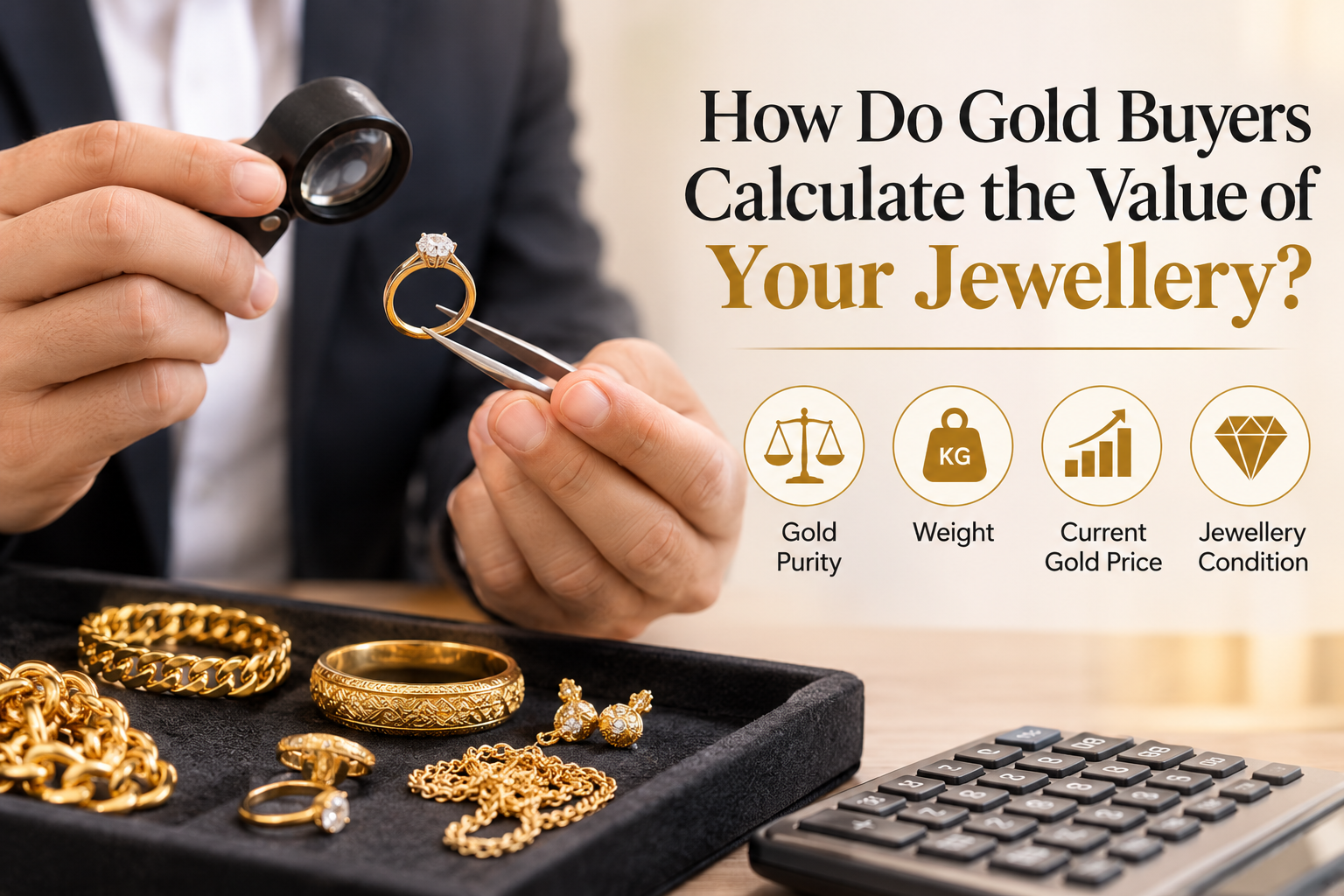
Professional gold buyers take into account the gold purity of the item, the weight of the item, the current market price for gold, and the overall condition of the item to determine its value. Having a basic understanding of these elements will allow you to make a more educated decision and receive a reasonable amount for your gold.
This guide will provide an explanation of how gold buyers determine the price of your jewellery, along with what you need to consider before making a sale.
The most significant factor that affects the worth of a piece of gold jewellery is the amount of pure gold it contains. The measurement of gold purity can be represented by either carats (ct) or Ks and represents the percentage of pure gold contained in a product.
Pure gold is 24 carats, however, since pure gold is a relatively soft metal, jewellery is usually made from pure gold alloyed with other metals to increase the hardness and durability of the jewellery.
Here are some common gold purities:
When compared to 22-carat gold, 18-carat gold has a smaller percentage of pure gold and will consequently have a smaller value of gold per gram (assuming all other variables are equal).
Gold buyers will generally look for a hallmark stamped onto each piece of jewellery to find out how pure it is. When a hallmark cannot be found, or if it is unreadable, gold buyers can use other professional testing methods to determine how much gold is present in the item.
Another key element in determining the worth of your jewellery is how much it weighs. Buyers of gold typically use digital scales to measure the weight of a piece of jewellery, and these scales are usually calibrated to show the weight in grams.
However, a piece's overall weight is not necessarily an indication of how much gold is contained within. Many pieces of jewellery include stones, diamonds, clasps, etc., which contain no gold at all.
A gold ring of 10 g weight can have a diamond and/or other decorative elements. The buyer would need to calculate the value of the different elements (diamond, etc.) in addition to the gold value.
The higher the level of pure gold in your jewellery, the higher the possible scrap gold price for that jewellery.
When buying gold, most professional gold buyers use the current gold spot price to determine what they will pay for a piece of jewellery.
The spot price is the current market price of gold for instant delivery, and it's typically expressed in dollars per troy ounce. A Troy ounce has about 31.1035 grams.
The spot price does not always equal the price at which you can sell your jewellery. Buyers must factor in refining costs, business expenses, and desired profit.
Knowing the current price of gold when you decide to sell your jewellery will help you determine whether the price being offered is fair.
The formula used by most gold purchasers is basic and relies upon the weight, fineness (purity), and current price of the gold.
The basic formula is:
Gold Value = Gold Weight × Purity Percentage × Current Gold Price Per Gram
For example, if you own 10 grams of 18-carat gold jewellery and the market price for one gram of pure gold is £100.
The calculation would be:
This example of a calculation is for demonstration purposes and does not represent a current price for gold or a guarantee of what you would receive if you sold your gold.
Gold jewellery is not always marked with a clearly visible hallmark. As such, professional buyers will often test the item using various testing procedures to verify the item's authenticity and purity.
Common methods include:
Buyers use official Hallmark stamps to verify how pure the gold is. The United Kingdom has several different types of purity stamps used on jewellery. Some examples of these stamps include 375 for 9-carat gold, 585 for 14-carat gold, 750 for 18-carat gold, and 916 for 22-carat gold.
Acid Test: A tiny sample or a selected area of the item can be tested with specialised acid to determine what percentage of pure gold it contains. The use of this method requires knowledge and proper safety measures.
X-Ray Fluorescence (XRF) testing: This is an analytical, non-destructive testing technique using X-rays to determine the chemical composition of metals. Buyers may use this type of testing to assess the purity level of their gold purchases without causing damage to the jewellery.
These approaches enable those buying gold to determine the true amount of gold present and reduce their reliance on its appearance.
Yes, gemstones can influence the overall value of your jewellery.
When your ring, necklace, or bracelet has diamonds, rubies, sapphires, or any other valuable stone in it, then the person buying from you will likely evaluate the stones separately from the metal.
The value of a diamond can depend on the four Cs:
However, all gold buyers do not buy gemstones individually. Many buyers are most interested in the scrap value of the gold itself. Other buyers, specifically those who specialise in buying and selling jewellery, will look at how much the entire piece of jewellery could sell for.
In addition to this question, it is also important to consider if your gemstones will receive individual valuations prior to you accepting an offer.
The state of your jewellery could affect the amount you receive when selling it. This is especially true if you plan on having someone else purchase the item to re-sell it, rather than having the item melted down.
As a result, a high-quality antique gold necklace, designer bracelet or branded engagement ring in top-notch condition can be worth more than just the value of the gold it contains.
In contrast, the value of damaged, broken or out-of-date jewellery is typically based upon how much gold it contains.
Old or damaged jewellery may be worth money if it contains gold.
Ask the buyer if they intend to purchase your item to resell, restore or use as scrap before making a sale.
A little preparation can help you make a better selling decision.
Here are some useful tips:
These steps should allow you to have realistic expectations when making your final decision.
Final Thoughts
By knowing what goes into determining the price of jewellery that gold buyers will pay, you should be able to sell your unwanted gold with greater confidence. The major factors in calculating value include the gold content (purity), weight and current market rates for gold. Other factors that can affect value include whether there are any gemstones present, the reputation of the manufacturer and the condition of the item.
Before accepting an offer on your gold, check the current gold price, know about the testing process and compare offers from well-known buyers. A transparent buyer should explain how they set the price and what you will get.
FAQ’s
Professional gold buyers take into account the gold purity of the item, the weight of the item, the current market price for gold, and the overall condition of the item to determine its value. Having a basic understanding of these elements will allow you to make a more educated decision and receive a reasonable amount for your gold.
This guide will provide an explanation of how gold buyers determine the price of your jewellery, along with what you need to consider before making a sale.
Gold Purity: Understanding Carats
The most significant factor that affects the worth of a piece of gold jewellery is the amount of pure gold it contains. The measurement of gold purity can be represented by either carats (ct) or Ks and represents the percentage of pure gold contained in a product.
Pure gold is 24 carats, however, since pure gold is a relatively soft metal, jewellery is usually made from pure gold alloyed with other metals to increase the hardness and durability of the jewellery.
Here are some common gold purities:
- 24-carat gold: Contains approximately 99.9% pure gold.
- 22-carat gold: Contains approximately 91.7% pure gold.
- 18-carat gold: Contains 75% pure gold.
- 14-carat gold: Contains approximately 58.5% pure gold.
- 9-carat gold: Contains 37.5% pure gold.
When compared to 22-carat gold, 18-carat gold has a smaller percentage of pure gold and will consequently have a smaller value of gold per gram (assuming all other variables are equal).
Gold buyers will generally look for a hallmark stamped onto each piece of jewellery to find out how pure it is. When a hallmark cannot be found, or if it is unreadable, gold buyers can use other professional testing methods to determine how much gold is present in the item.
Weight of Your Gold Jewellery
Another key element in determining the worth of your jewellery is how much it weighs. Buyers of gold typically use digital scales to measure the weight of a piece of jewellery, and these scales are usually calibrated to show the weight in grams.
However, a piece's overall weight is not necessarily an indication of how much gold is contained within. Many pieces of jewellery include stones, diamonds, clasps, etc., which contain no gold at all.
A gold ring of 10 g weight can have a diamond and/or other decorative elements. The buyer would need to calculate the value of the different elements (diamond, etc.) in addition to the gold value.
The higher the level of pure gold in your jewellery, the higher the possible scrap gold price for that jewellery.
Current Gold Market Price
Gold prices fluctuate constantly based on international market factors. Inflation, exchange rates, economic stability/instability, activities of central banks, and investor demand are all examples of variables that affect the gold price.When buying gold, most professional gold buyers use the current gold spot price to determine what they will pay for a piece of jewellery.
The spot price is the current market price of gold for instant delivery, and it's typically expressed in dollars per troy ounce. A Troy ounce has about 31.1035 grams.
The spot price does not always equal the price at which you can sell your jewellery. Buyers must factor in refining costs, business expenses, and desired profit.
Knowing the current price of gold when you decide to sell your jewellery will help you determine whether the price being offered is fair.
How Gold Buyers Calculate Jewellery Value
The formula used by most gold purchasers is basic and relies upon the weight, fineness (purity), and current price of the gold.
The basic formula is:
Gold Value = Gold Weight × Purity Percentage × Current Gold Price Per Gram
For example, if you own 10 grams of 18-carat gold jewellery and the market price for one gram of pure gold is £100.
The calculation would be:
- Jewellery weight: 10 grams
- Gold purity: 75%
- Pure gold content: 10 × 75% = 7.5 grams
- Illustrative gold value: 7.5 × £100 = £750
- This means the estimated raw gold value is £750.
This example of a calculation is for demonstration purposes and does not represent a current price for gold or a guarantee of what you would receive if you sold your gold.
Gold Testing Methods Used by Professional Buyers
Gold jewellery is not always marked with a clearly visible hallmark. As such, professional buyers will often test the item using various testing procedures to verify the item's authenticity and purity.
Common methods include:
Buyers use official Hallmark stamps to verify how pure the gold is. The United Kingdom has several different types of purity stamps used on jewellery. Some examples of these stamps include 375 for 9-carat gold, 585 for 14-carat gold, 750 for 18-carat gold, and 916 for 22-carat gold.
Acid Test: A tiny sample or a selected area of the item can be tested with specialised acid to determine what percentage of pure gold it contains. The use of this method requires knowledge and proper safety measures.
X-Ray Fluorescence (XRF) testing: This is an analytical, non-destructive testing technique using X-rays to determine the chemical composition of metals. Buyers may use this type of testing to assess the purity level of their gold purchases without causing damage to the jewellery.
These approaches enable those buying gold to determine the true amount of gold present and reduce their reliance on its appearance.
Do Diamonds and Gemstones Affect Gold Jewellery Value?
Yes, gemstones can influence the overall value of your jewellery.
When your ring, necklace, or bracelet has diamonds, rubies, sapphires, or any other valuable stone in it, then the person buying from you will likely evaluate the stones separately from the metal.
The value of a diamond can depend on the four Cs:
- Cut: How well the diamond has been cut and how it reflects light.
- Colour: The presence or absence of colour.
- Clarity: The number and visibility of internal or external imperfections.
- Carat: The diamond's weight.
However, all gold buyers do not buy gemstones individually. Many buyers are most interested in the scrap value of the gold itself. Other buyers, specifically those who specialise in buying and selling jewellery, will look at how much the entire piece of jewellery could sell for.
In addition to this question, it is also important to consider if your gemstones will receive individual valuations prior to you accepting an offer.
Does the Condition of Your Jewellery Matter?
The state of your jewellery could affect the amount you receive when selling it. This is especially true if you plan on having someone else purchase the item to re-sell it, rather than having the item melted down.
As a result, a high-quality antique gold necklace, designer bracelet or branded engagement ring in top-notch condition can be worth more than just the value of the gold it contains.
In contrast, the value of damaged, broken or out-of-date jewellery is typically based upon how much gold it contains.
Old or damaged jewellery may be worth money if it contains gold.
Ask the buyer if they intend to purchase your item to resell, restore or use as scrap before making a sale.
Tips to Get the Best Price for Your Gold Jewellery
A little preparation can help you make a better selling decision.
Here are some useful tips:
- Check the gold hallmark: identify the carat value before visiting a buyer.
- Know the weight: Have an approximate idea of your jewellery's weight.
- Check out the current price of gold: Know what the current market value of gold is before asking for a valuation.
- Compare different offers: Obtain quotes from more than one reputable gold buyer.
- Enquire about extra costs: determine if any refining, testing, or other fees will impact your total cost.
- Keep your precious gems separate: Find out if your diamonds and other precious stones can be appraised separately.
- Select an established seller: find one that has transparent pricing, clear methods of testing, and has the proper business licence.
These steps should allow you to have realistic expectations when making your final decision.
Final Thoughts
By knowing what goes into determining the price of jewellery that gold buyers will pay, you should be able to sell your unwanted gold with greater confidence. The major factors in calculating value include the gold content (purity), weight and current market rates for gold. Other factors that can affect value include whether there are any gemstones present, the reputation of the manufacturer and the condition of the item.
Before accepting an offer on your gold, check the current gold price, know about the testing process and compare offers from well-known buyers. A transparent buyer should explain how they set the price and what you will get.
FAQ’s